
The Manger Player

‘And she brought forth her newborn son, and wrapped him in swaddling clothes, and laid him in a manger’ – Luke 2:7

How extraordinary is the chronicle of Christ’s Nativity!  Peasant parents-to-be on the move to register for the all-powerful Emperor Augustus’s census, mere mice in a world patrolled by imperial lions.  Arriving at their destination, they are forced to bring forth their miracle child in less-than-ideal conditions.  Depending on your interpretation of events, they were either shuffled off from the inn to a barn out back or relegated to the lower portion of a dwelling where the animals were kept.  Either way, their son – no less than the Son of the God – was born in a stable.  You might have thought that the Almighty Maker of Heaven and Earth, who created the universe out of nothing, could have arranged a better location for His Son’s birth than a place that stank like wet animal fur and dung.  The only people who came to acknowledge the incredible introduction of God in human skin were shepherds (the magi came later), hardly the major players of Judean society.  It was hardly an auspicious beginning.  The regents of the world would never have done it this way.

Which is precisely the point.  This was the unfolding of God’s plan to save the world, and God, though the possessor of ultimate and comprehensive power, doesn’t behave like the world’s major players.  He reveals his strength in weakness, a weakness that proves itself to be stronger than human strength (See, 1 Corinthians 1:25; 2 Corinthians 12:9).  It is through weakness and foolishness that God saves the world.  Which explains perfectly why Jesus was conceived in the womb of a poor peasant girl, birthed in a stable, and laid in a manger, why he came into the world not as a major player but, if you will, a ‘manger player.’  That’s the way God rolls. 

We would do well to remember this.

Too often we do not.  History is replete with examples of professing Jesus followers pursuing the way of power, the path of the major players, rather than the path of the one in the manger.  It is a path God never asked his people to follow, one that He Himself expressly rejected in the life of His Son.  Yet many follow it anyway, believing that obtaining what the world perceives as power is not only important but a matter of life and death. 

I am reminded of this every day when I read the news.  The 2020 Presidential election is over, and most of us would like to move on, but as we all know the President is playing a dangerous game, spinning patently false conspiracy theories in a transparent attempt to steal an election in pursuit of his own interests.  That a political leader, a major player on the world stage, would behave in such a manner probably shouldn’t surprise us.  The regents of the world often behave this way.  It’s kind of par for the course.  The extent to which it seems odd to us in America reflects how privileged we have been in this society up to this point.  Not everyone in the world is quite so privileged. 

But to see professing Christians, those who claim to follow Jesus, backing such an effort, hoping to thereby have access to the halls of power, exercise influence, and advance an agenda, should shock the conscience of everyone who hopes to honestly follow the one born and laid in a manger. 

An influential leader in the evangelical world recently gave voice to the position of many when he echoed the President’s lies, refused to accept the ‘monstrous’ Joe Biden as his fellow American, and called the election ‘the most horrifying thing that has ever happened in the history of the nation.’  He then proclaimed to the President (who had called in to his show; yes, this man has a show): ‘I’d be willing to die in this fight.  This is a fight for everything.  God is with us.’[1] In brief, this leader conveyed his belief that Christians had to fight for Trump because everything depends on keeping him in office

I beg to differ.  Christians should know that everything does not depend on keeping one’s preferred political candidate in power.  Rather, everything depends on following the one who, rather than be born in a palace and laid on a bed of downy softness, was born in a stable and laid in a manger.  Everything depends on following the one who, after he grew into adulthood, expressly spurned the imperial power game.  Everything depends on following the one who, though he had created all things, rejected being a major player on the world’s terms, took up his cross as his preferred means to save the world, and called us to do the same.

The Apostle Paul said that Christians are to have the same mind as Christ Jesus, who, even though he was God, renounced his privilege, became one of us, took on the form of a servant, and humbled himself all the way to the Cross (Philippians 2:5-8). 

There is a battle worth dying for in our time.  It’s a battle for the soul of the Church.  In this battle, with all due respect to the evangelical leader quoted above (and those who agree with him), the question is not whether we will give our lives for Donald Trump.  Or Joe Biden.  Or any other major player on the scene of imperial politics.  The question is not whether we will give our lives in the mad quest to obtain imperial power that we might change the world from the top down.  The question is whether we will give our lives, not for the major players, but for the ‘manger player,’ pursue his humble path, and walk with him as he changes the world from the bottom up. 

As the Mandalorian would say, ‘This is the way,’ and everything depends upon our following it.    

Under Christ’s Mercy,

Brent


[1] Eric Metaxas, Christian Radio Host, Tells Trump, ‘Jesus is With Us in this Fight.’ Religion New Service. November 30, 2020.
A Strange Way to Save the World

The people who walk in darkness will see a great light…for a child is born to us, a son is given to us’ – (Isaiah 9:2;6)

One small child.  Born into poverty.  Laid in a manger.  God’s plan to save the world.

Ridiculous. 

I mean, just look at the scope of the problem: a world fallen from its original purpose, trapped under the power of sin and death.  A power capable of separating people from one another and from God.  God had a plan to defeat it though, the prophets said.  A plan that would save the people from sin and death, turn swords into plowshares, guide humanity in the way of peace, replace hearts of stone with hearts of flesh, make all things new, and carry humanity back to God. 

Surely it would be a grand plan.  God would give us something mighty and powerful.  Something to set the hair of the world on end. 

Instead, he gave a baby. 

Worse still, he sent the baby into enemy occupied territory.  Israel was a mere a province in the vast Roman Empire, an empire that never hesitated to make an example of anyone deemed to pose a threat.  The ruler of Judea, King Herod, governed with the consent of this empire, and was just as bad.  Indeed, Matthew tells us that in the wake of Jesus’ birth, Herod did everything he could to kill him.  A bit later, Luke tells us, an old man named Simeon pronounced that the child will be opposed. 

And he would be.  The road that lay ahead of that small child born and laid in a manger was fraught with opposition.  He would wield no political or military power, yet somehow be called upon to navigate through a maze of religious, political, and demonic power to fulfill his mission.  Which was – and this is truly ridiculous – to reveal God’s love to the world by dying on a cross. 

This was God’s plan to save the world from the dungeon of darkness. 

Like I keep saying, it was ridiculous.  If we had stood by Jesus’ manger that first Christmas night, I wonder what odds we would have given that he would succeed?  A baby against an empire?  A baby against the power of religion?  A baby against the forces of hell?  What were the odds of success?

Zip.  Zero.  Nada.  Goose eggs. 

Someone out there may recognize the way I just said that.  That sequence of words comes from one of my favorite children’s books: Kate DiCamillo’s The Tale of Despereaux.  It tells the story of a mouse, Despereaux Tilling, who was born into his own version of a dangerous world.  He was so small that no one expected him to live.  But somehow, he did.  He was different from other mice in that he had very large ears and was born with his eyes open.  Thus, from the very beginning, Despereaux Tilling was able to see and hear more than others.  He was also unlike other mice in that while other mice were afraid of their own shadows, Despereaux dreamed of valor, honor, and most of all, courage.   

Despereaux and his fellow mice lived in the King’s Castle in the Kingdom of Dor, and while the other mice avoided contact with the people of the castle, Despereaux actively sought them out.  One day, while wandering around the castle, he met the Princess Pea.  And that’s when something grand happened: she smiled at him, and he smiled back.  And then, if you can believe it, he fell in love.  DiCamillo notes in her book right away that it is of course ridiculous for a mouse to fall in love with a princess.  But then again, as she puts it, ‘love is ridiculous.  But, love is also wonderful.  And powerful.  And Despereaux’s love for Pea would prove, in time, to be all of these things: powerful, wonderful and ridiculous.’

At about the time that Despereaux was ridiculously falling in love with a human princess, a series of events were unfolding that brought disaster to the Kingdom of Dor.  I don’t want to ruin the story for you – I would encourage you all to read it for yourselves – but the long and the short of it is that Pea is kidnapped and taken to the deepest part of the dungeon beneath the castle.  Guess to whom it falls to rescue her? 

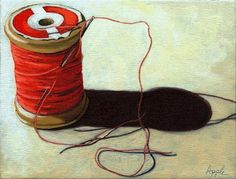
That’s right, Despereaux Tilling.  Armed with nothing more than a spool of red thread and a needle, he descends into the dungeon to find the princess. 

Which takes me to the point of this post.  DiCamillo writes:

‘That night, Despereaux rolled the thread from the threadmaster’s lair, along innumerable hallways and down three flights of stairs.  Reader, allow me to put this in perspective for you: your average mouse (or castle mouse, if you will) weighs somewhere in the neighborhood of four ounces.  Despereaux, as you well know, was in no way average.  In fact, he was so incredibly small that he weighed about half of what the average mouse weighs: two ounces.  That is all.  Think about it: He was nothing but two ounces of mouse pushing a spool of thread that weighed almost as much as he did.  Honestly, what do you think the chances are of such a small mouse succeeding in his quest?  Zip.  Zero.  Nada.  Goose eggs.’ 

In other words, the same as the odds of one small child succeeding in his quest to save the world. 

But then, DiCamillo adds these beautiful words:

‘But you must, when you are calculating the odds of the mouse’s success, factor in his love for the princess.  Love, as we have already discussed, is a powerful, wonderful, ridiculous thing, capable of moving mountains.  And spools of thread.’ 

Love people.   Do you get it?  God’s strange way to save the world, through the birth of one small child, is surely as ridiculous as the notion of a mouse going off to save a princess.  And the odds of success in each case would seem to be about the same.  Zip.  Zero.  Nada.  Goose eggs.  But, just as it was in The Tale of Despereaux, you must, when calculating the odds of a small child’s success, factor in love.  For love, as we have said, is ridiculous, but it is also a powerful and wonderful thing, capable of moving mountains. And saving the world. 

This Christmas, know that it was God’s love that came down at Christmas time.  God’s love that led to the birth of that one small child.  God’s love that led that child to fulfill his mission and rescue us from our dungeons of sin and death.  This Christmas, I hope you will be a little ridiculous yourself – and love him back with all of your heart and soul – that you might experience just how ridiculous, powerful and wonderful God’s love truly is.  

Under Christ’s Mercy,

Brent

The World Outside Your Window

There’s a world outside your window, and it’s a world of dread and fear’ – Band Aid

‘Christmas is a time for positive thoughts.  So be positive in all you say and do this season.’  So said the article written by a prominent Evangelical Christian.  Out of context it sounds like good advice, a ‘count your blessings’ and ‘focus on the joys of the season’ sort of thing. I suppose he has a point.  There is so much to celebrate at Christmastime.  It would be a shame to miss out by thinking gloomy thoughts.  But the writer had an agenda.  His tone and tenor suggested that his real purpose was to silence anyone from speaking out against the cruelty and corruption of the Trump Administration.  It was basically a partisan piece designed to keep resisters quiet.  You know, stop pointing out that things are wrong and that people are getting hurt.  It’s ruining everyone’s good time, harshing the holiday buzz.  Just back off and allow everyone to bask in the hope, joy, love, and peace that is available during the season of Advent. 

That’s the kind of thing only a privileged, comfortable person could say these days.  For in fact, not everyone feels hope, joy, love, and peace this year.  Many are struggling to find hope, experiencing deep sorrow, battling hate, and living with a deep sense of unease.  The 1984 classic ‘Do they know it’s Christmas?’ written by Bob Geldof and Midge Ure to enlighten a languid western world to the reality of famine in Africa (a far worse situation than what we currently face to be sure), speaks well to many in America today:

In our world of plenty, you can spread a smile of joy

Throw your arms around the world at Christmastime.

But say a prayer – pray for the other ones –

At Christmastime, it’s hard, but while you’re having fun,

There’s a world outside your window, and it’s a world of dread and fear.

Where the only water flowing is the bitter sting of tears.

And the Christmas bells that ring there, are the clanging chimes of doom.

Well tonight, thank God it’s them, instead of you.

I was reminded of this world outside our windows while watching the NETFLIX series, Living Undocumented.  It tells stories of families victimized by Trump’s ‘zero tolerance’ immigration policy.  The first episode includes the story of a man separated from his wife, about to be separated from his son, as our government works to deport them both.  The closing scene shows the father praying with his immigration attorney, hoping against all hope for a miracle.  How can I ‘just think positive thoughts’ knowing that my brother in Christ – and he is but one of thousands – weeps and prays for a miracle to save his family from a policy that a majority of white Christians in America either support or simply choose not to think about? 

Then I think of the refugees, people who have fled war, terror, and starvation, seeking asylum in the United States, the land that once welcomed the ‘tired, the poor, the huddled masses yearning to breathe free.’ A couple of months ago, America recorded the first month in ages in which it resettled a total of zero refugees.  I imagine these people living in tents, waiting for a miracle, realizing that there will not be one in time for Christmas.  Or maybe ever.

I think of an African-American community, mourning the death of yet another son, a young man gunned down because the color of his skin was considered a threat to someone’s existence.  I imagine this community listening to the bitter rhetoric of a President aggressively seeking to maintain the dominance of whiteness in America, fueling minds that hate, proclaiming, essentially, that black lives do not matter.  I imagine families in that community fearfully wondering whether the next son gunned down will be their own. 

Geldof and Ure were right: there is indeed a world outside our windows, and it’s a world of dread and fear. 

I don’t mean to be depressing though.  Because I believe that even in the midst of such a world, there is hope – and joy and love and peace.  Why?  Because I believe in Christmas.  Christmas gives us reason to believe in all of those positive things even in the midst of negative realities.  Not by ignoring those realities, but by realizing that something has been and can be done about them.  But in order for hope to rise, we need to understand Christmas rightly.

Christmas isn’t the story of having fun and thinking positive thoughts while ignoring the painful realities of the world.  Christmas is the story of a God who looked outside the window of heaven, saw the pain and peril of His people, and did something.  The world at the time was brutal.  Caesar was King, and his legions terrorized the world.  Quite frankly, the actions of the Romans toward conquered peoples makes Trump seem like a lightweight.  The opening scenes of The Nativity Story (which I heartily recommend you watch this Christmas season) depict the way in which the Romans cruelly oppressed the Jewish people, taking away their livelihoods, kidnapping their daughters to work off their debts.  Resistance was not tolerated, and those who dared oppose Rome suffered the sword or the cross.  It was, indeed, a world of dread and fear. 

God saw all of this, and did two things.  First, he spoke.  The God who spoke creation into existence spoke what Michael Card calls, ‘one final, perfect word:’ Incarnation.  Second, he acted.  He acted on His word, entering into the suffering of His people.  God did not simply bask in the positive glow of heaven.  He spoke and acted concretely in the lives of the oppressed. 

You can see this clearly in the Christmas story.  God spoke to Zechariah, bringing hope to an old man and his wife by giving them a son.  And not just any son, but the son who was to prepare the way for God’s Messiah.  Not everyone understands this, but that was a revolutionary and subversive act, an overt challenge to the oppressive status quo.  God was sending his Anointed to set the world to rights, to ‘rescue His people from their enemies,’ as Zechariah put it (See, Luke 1:74).  God was not quiet in the face of oppression.  He spoke and acted against it. 

This is even clearer in the case of Mary.  Inspired by the Holy Spirit, she sang of the mystery and wonder that was happening to her by singing of scattering the proud and mighty, bringing down princes from their thrones, and sending the rich away empty as the poor and hungry were lifted up (See, Luke 1:46-55).  This is the language of revolution.  A warning shot across the bow of the powers that be.  An announcement that a new day was coming.  Neither God nor Mary were silent in the face of oppression.  They spoke and acted to make things right, even if their words made those in power feel uncomfortable. 

You can read the rest of the Christmas story on your own.  But the bottom line is that through it all, in the invitation to lowly shepherds, in the fulfillment of Simeon and Anna’s hopes, and most especially in the lowly birth of Jesus, we see God speaking and acting to challenge the status quo by acknowledging the suffering of his people, not ignoring it, but entering into and becoming a part of it.   

And therein lies the message for those who follow Jesus today.  In a world where outside our windows lie people who lack hope, love, joy, and peace, a world of dread and fear, where the only water flowing is the bitter sting of tears, where the Christmas bells that ring there are the clanging chimes of doom, the thing to do is NOT to simply bask in the warm glow of Christmas and thank God it’s them instead of you.  The thing to do is to speak.  The thing to do is to act.  The thing to do is to enter the suffering around you and become part of it

That’s what God did at Christmastime. 

It’s what he still does.

It would be a sin for those who follow him to do anything less. 

Under Christ’s Mercy,

Brent

The Dawn From On High

When Herod was the king of Judea, there was a Jewish priest named Zechariah…’ – Luke 1:1

The following is an excerpt from chapter one of my book, The Dawn from High: Advent Through the Eyes of Those Who Were There.

It is a terrible thing to lose one’s faith. I know because there was a time in my life when I had. Not entirely of course. In fact, my wife and I did our best to live as God taught in the Law of Moses. Had I lived in your day, I would have been the guy who went to church every Sunday, believed every line in the Apostle’s Creed, and drove around with the outline of a fish on my car. But for all that, I had lost my faith. I knew God could do amazing things. I just didn’t think he would. I guess you could say I was a functional atheist. I believed, but at the same time, I didn’t BELIEVE.

My problem was caused by two things. First, the silence of God in the face of my people’s oppression. The Romans ruled over us with an iron fist, taxing us, enslaving us, and defiling the land with their pagan ways. Through the prophets of old the Lord had promised a deliverer, the Messiah, but he sure was taking his time about it. It had been centuries since that promise had been made, and so, while I never ceased to believe God would keep it, I didn’t expect that to happen in my lifetime. I simply did not believe I would live to see the day of his appearing. Perhaps sometime in the future, in the lifetime of my son…

That was the second reason I had lost faith. My wife and I had kept the Law. We loved the Lord with all our hearts, souls, minds and strength. But the deepest prayer of our lives, the prayer for a child, had gone unanswered. Well, that’s not entirely correct. It seemed as if it had been answered, and the answer was a big fat ‘No.’ It was the heartache of our lives, though we did our best to conceal it. Everyone saw us as so righteous and devout. It would never have done (or so we wrongly thought) to let people know we had feelings too. And so, while I believed in God’s promises, at the same time I didn’t. Sure, they were true. But not for Elizabeth and I.

But then one day God did something that restored my fragile faith. This is my story – the story of how God made me a believer again.

It was the proudest day of my career. I had been selected by lot to burn incense in the Holy Place of the Temple. This was an honor many priests never experienced, and yet another blessing I believed had passed me by, but there I was, chosen to perform this sacred act. I would come as close to the Most Holy Place, the place that once held the Ark of the Covenant, where God himself dwelled in the days of our ancestors, as a priest such as myself was permitted to go. Only the High Priest could go further, into the Holy of Holies, and that was only once a year on the Day of Atonement. I was to stand right outside that most sacred space and burn incense to the Lord. It was to be the greatest moment of my priestly career.

I made preparation and entered the sanctuary of the Lord. Before me stood the altar, behind it, the curtain that separated me from the Most Holy Place. I had chills. I could hardly believe I was there. With shaking hands I presented the offering. I was so nervous I honestly don’t know how I got through it, but somehow I did. I then prostrated myself before the altar, offered a prayer for the salvation of Israel and, still quivering, rose to leave.

Only I didn’t leave. Because that’s when I saw something I never expected to see.

It was an angel. I wish I could describe what he looked like, but honestly I can’t. All I can tell you is that he was both beautiful and terrifying. Thinking back on the experience, I can only chuckle at the fact that I had been standing as close to the presence of God as I had ever hoped to come, and yet was surprised to encounter the supernatural. Like I said, I was a functional atheist. But I wasn’t chuckling then. I was terrified. So there I was, shaking like a baby’s rattle, when just as suddenly as the angel appeared, he spoke.

‘Do not fear Zechariah, for your prayer has been heard!’ My heart nearly seized up when he said that, for I had just prayed for Israel’s salvation, for her deliverance from Rome. That alone was the greatest news I had ever heard. But deep within me, another thought competed for prominence: the thought that perhaps he was referring to my other prayer, the one my wife and I had offered so many times. I was no longer sure which of the two prayers he meant, but either one being answered would have been enough for me.

That’s when the angel really bowled me over.

‘Your wife Elizabeth will have a son, and you will name him John! You will be filled with great joy, as will others at the news of his birth. He will be great in God’s sight, and will be filled with the Holy Spirit. Indeed, he will bear the spirit and power of Elijah, and he will turn the hearts of Israel back to God. And he will clear the way for the coming of God’s Messiah!’

O Sovereign Lord! How easy it is for me now to thank you for what the angel said then! Not only did you give me a son, but you made him the one to prepare the way for your Messiah! Every reason I ever had not to believe had been dispelled in that moment. Not only could you do great things, but you were doing them! And you were doing them through the likes of me!

But alas, at the time, after so many years of not truly believing, I didn’t say anything like that. I said something else. Now please, before you judge me, put yourself in my shoes. My wife and I were hardly spring chickens. Sure, I knew about the story of Abraham and Sarah, and the miraculous birth of Isaac, but that had been a long time ago. And so, as I tried to get my mind around the angel’s words, I blurted out the dumbest thing I ever said in my life.

‘How can I know this will happen? I’m too old to have children, and my wife’s right up there with me. How can I be sure you are telling me the truth?’ Such a reasonable thing to say, don’t you think? So rational. So well grounded in fact. It was an entirely logical question to ask.

It was also utterly dismissive of the power of God.

The angel certainly thought so. He seemed to grow in size, beauty, and terror as he spoke: ‘I am Gabriel! The messenger of God! I have brought you good news, the greatest of all, and all you can say is that you’re too old! Well let me tell you ‘Mr. Too Old,’ I stand in the very throne room of God. And if you did that for even one minute, you would not dare question what God can do. But since you have asked for a sign, I will give you one. My words will be fulfilled in their time, but until they are, you will not be able to speak!’

I was struck dumb in an instant. I tried to respond but could not. But the punishment was fitting. I had been a priest for so long, but I had been all talk. When the chips came down, I did not believe. The angel’s punishment was fair, and which is more, redemptive, for over the next nine months, I would have ample opportunity to quietly watch, learn, ponder, and pray as I rediscovered what it meant to believe…

For the rest of Zechariah’s story, and to hear other perspectives on Advent through the eyes of Mary, Joseph, a Shepherd, Simeon, Anna, Herod and Gabriel, click here to check out my book The Dawn from On High.

Under Christ’s Mercy,

Brent

Photo courtesy of Levi Bare on Unsplash.